

Not a literal tutorial, a metaphorical one… to be used as a plot device!
I suppose actively wanting to punch a god is also entirely dependent on what a god or capital ‘G’ God actually is in your story. What do they represent, who are they are to the mortals of your world and why do one or more mortals of the world want to punch them in the first place?
A topic I am very excited to explore!
Before we get into it, the reason I’m researching this topic is because it’s the main conflict in the story I’m currently writing! Just under 20,000 words into the story now of just word dumping all my ideas and plot points onto a page. (The first edit is going to be a nightmare, I tell you.)
Of course, God vs Mortal is an extremely broad topic, so I’ll be narrowing down different aspects of this conflict by talking about different stories that utilize this idea in their own unique way.
And while physical violence with a god would be an interesting and amusing story, (cough cough- Terry Pratchett’s ‘The Last Hero’ -cough cough), there are more nuanced ways this conflict can be portrayed.
One of the most well known stories that I think portrays this conflict is the creation of mankind itself. In almost all cultures and religions around the world there is the story of how the first humans were created. And I say created, specifically, since in almost every myth the first humans were crafted out of dirt or clay, created in the image of the gods themselves.
Let’s focus on the story of Adam and Eve, from the book of Genesis. (There’s actually two different stories in Genesis of how humans were created, but I’ll be using the one in chapter 1, where Man and Woman were created simultaneously.)

You’ve probably all at least heard of this one; God creates one man and one woman and has them live in the Garden of Eden, on the condition that they don’t eat any fruit from the Tree of Knowledge of Good and Evil, for they will die if they do. Enter the serpent or trickster, who encourages human curiosity and convinces them to eat the forbidden fruit. And thus humanity ‘falls’ from grace as they gain the knowledge of good and evil, are kicked out of the divine garden, and into the plane of mortals, which is the world we all live in now.
I always found it interesting that the tree of the forbidden fruit was called the Tree of Knowledge. Knowledge of Good and Evil, yes, but knowledge all the same. If Adam and Eve had no knowledge of what was good or evil, then it’s not hard to imagine they had no idea how to truly think or make decisions for themselves. They were simply given their existence and expected to exist as their creator saw fit.
Now, if Adam and Eve truly had no concept of good or evil, then they would have no reason to suspect the serpent of deceit, making them suggestible and easy to manipulate.
But… who was the true manipulator?
Was it the serpent, who told Eve that she wouldn’t die by eating the fruit, and her eyes would be opened with her increased knowledge?
Or was it God, who created Adam and Even in his image and then told them they’d die if they disobeyed him and ate the forbidden fruit?
Can God or the serpent truly be manipulating them, if Adam and Eve didn’t have the free will to be manipulated one way or the other in the first place?
In a way, both the serpent and God were telling the truth. Adam and Eve did have their eyes opened, to both the concept of good and evil which allowed them to choose for themselves how to live, but they also became true mortals, which, by definition, means they would indeed die one day.
So the true conflict I see in this story is that of the will of the creator clashing with the free will of the created.
This concept plays well with the idea of destiny or fate. If a deity or god or supernatural entity bestows a predestined path to a mortal, does that mortal have true freedom to live as they want, or are they beholden to the will of a higher power?
One series that I thought displayed this conflict really well was the ‘His Dark Materials’ series by Phillip Pullman. The trilogy revolves around the main character, Lyra, who is destined to be the second Eve, who has the ability to remain pure forever and return humanity to what it was before the ‘fall’ of the first Eve, but if she ‘falls’ just as the first Eve did, Lyra would allow humanity to retain their free will. One detail that I really liked was that throughout the trilogy, Lyra was able to instinctively read the golden compass, the alethiometer, to help in her journey across worlds and through the trials she faced, which resulted in her ‘falling’ just as the first Eve did, and thus triumphing over destiny and allowing all mortals the free will to choose their own fate.
After her return home, Lyra discovers that she’s unable to read the alethiometer like she did on her journey. Since she was no longer one blessed by ‘destiny’ she had the choice of whether or not she wanted to learn to read it rather than being able to read it automatically.
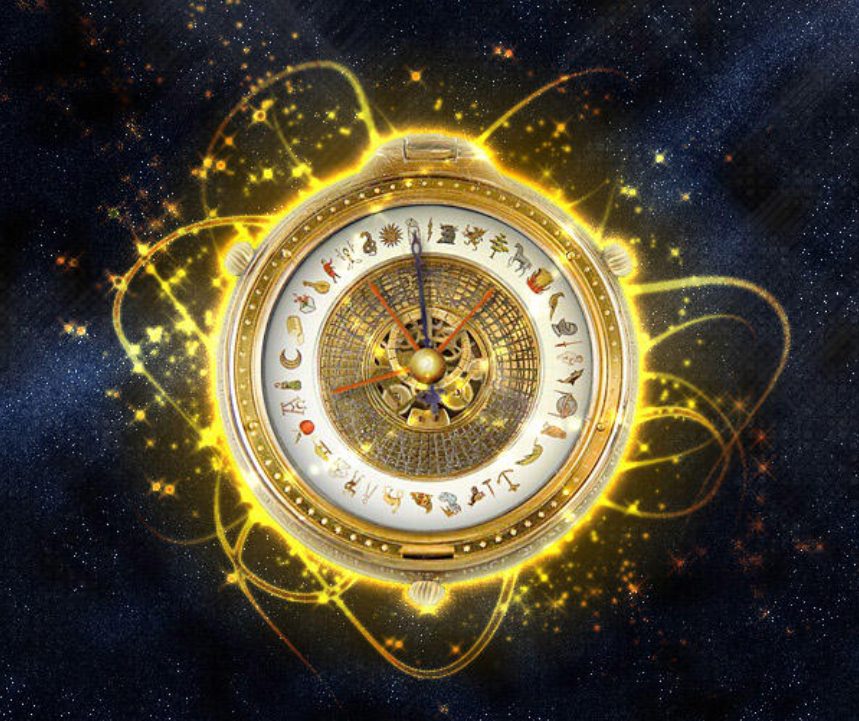
I thought that was a nice detail to include, that a life lived with free will may not have a future that is as easily predicted as a predetermined destiny, but it is one where your future is shaped by your own choices.
Another factor to be considered in a conflict between mortals and gods is the importance of knowledge. Something that can be seen in the previous examples is that knowledge is a powerful thing to have, giving those with access to it an enormous amount of control over those who don’t. This theme is very prominent in both the myth of Adam and Eve and in ‘His Dark Materials.’
A story that takes this concept and absolutely nails it in my opinion, is ‘City of Stairs’ by Robert Jackson Bennett. I mean, the main premise begins when a historian is murdered under suspicious circumstances, and that is just the beginning of how deep the restriction of knowledge runs.
The restricted access to the study of history and the ban on any kind of worship to the now dead gods set the stage for the protagonist, Shara, who is one of the few people of the world to actually know a significant amount of the world’s history, to fully embody the saying that ‘knowledge is power.’
While this premise isn’t one of direct conflict between gods and mortals, it is a brilliant use of how the restriction of religion and knowledge can be easily used to prevent freethinking and free will, similar to the idea of a god-granted destiny that a character can do nothing to escape. No knowledge, no free will, no choice.
Now, these are some pretty deep and dark topics, but extremely interesting to utilize when creating a deeper world history for a fantasy story, capable of being used a subtly or as conspicuously as the story needs.
As you can probably guess, I’m exploring these ideas in my own story, in a different way than what is seen in these examples, but similar nonetheless. I know I haven’t even scratched the surface of this plot conflict, what with how broad the general God vs Mortal plot is, but this post is too long as it is, so I’ll revisit this topic later.
Hopefully this helps all you fine people out there get a better idea of how this conflict can be utilized in your story, or help you better understand a story you’re currently or have read in the past!
I’m happy to discover more stories that use an aspect of this conflict, so if anyone is reading this and has a story to share, please do! (I’m ALWAYS looking for recommendations!)
Thanks for reading!
 The Silk Quill